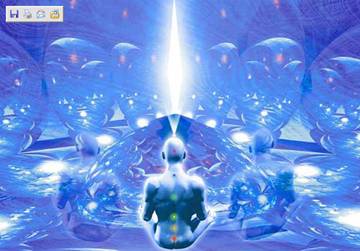
When I use the word 'aesthetics' I mean a quality in you. It has nothing to do with objects -- paintings, music, poetry -- it has something to do with a quality in your being, a sensitivity, a love for beauty, a sensitivity for the texture and taste of things, for the eternal dance that goes on all around, an awareness of it, a silence to hear this cuckoo calling from the distance....
- The Dhammapada: The Way of the Buddha, Vol 1, Chapter #8
To me, aesthetics is the closest neighbor of religiousness, not ethics.
Lenin is reported to have said, 'Ethics will be the aesthetics of the future.' I say: No, just the contrary; aesthetics will be the ethics of the future. Beauty is going to be the truth of the future, because beauty can be created. And a beautiful person, who loves beauty, who lives beauty, who creates beauty, is moral -- and with no effort. His morality is not a cultivated morality, it is just his aesthetic sense that makes him moral.
- The Secret of Secrets, Vol 1, Chapter #9
Life is a hierarchy of needs. First the physical need has to be taken care of, the material existence has to be taken care of. Science fulfills a basic need. If you miss science you will miss religion. Between science and religion is the world of art. These are the three basic dimensions of life. Science has to take care of the material, the physiological, the biological -- the extrovert needs of man. Religion has to take care of the innermost -- the interiority, the subjectivity. And between the two is the world of aesthetics: art, poetry, music, dance, drama, literature.
- The Goose is Out, Chapter #4
Aesthetics is just an artistic approach towards life, a poetic vision. Seeing colors so totally that each tree becomes a painting, that each cloud brings the presence of God, that colors are more colorful, that you don't go on ignoring the radiance of things, that you remain alert, aware, loving, that you remain receptive, welcoming, open. That's what I mean by the aesthetic attitude, the aesthetic approach.
- The Dhammapada: The Way of the Buddha, Vol 1, Chapter #8
Monday, September 21, 2009


Saturday, September 19, 2009
OSHO
When people come to me and they ask, "How to meditate?" I tell them, "There is no need to ask how to meditate, just ask how to remain unoccupied. Meditation happens spontaneously. Just ask how to remain unoccupied, that's all. That's the whole trick of meditation - how to remain unoccupied. Then you cannot do anything. The meditation will flower.
When you are not doing anything the energy moves towards the centre, it settles down towards the centre. When you are doing something the energy moves out. Doing is a way of moving out. Non-doing is a way of moving in. Occupation is an escape. You can read the Bible, you can make it an occupation. There is no difference between religious occupation and secular occupation: all occupations are occupations, and they help you to cling outside your being. They are excuses to remain outside.
Man is ignorant and blind, and he wants to remain ignorant and blind, because to come inwards looks like entering a chaos. And it is so; inside you have created a chaos. You have to encounter it and go through it. Courage is needed - courage to be oneself, and courage to move inwards. I have not come across a greater courage than that - the courage to be meditative.
But people who are engaged outside - with worldly things or nonworldly things, but occupied all the same, they think ....and they have created a rumor around it, they have their own philosophers. They say that if you are introvert you are somehow morbid, something is wrong with you. And they are in the majority. If you meditate, if you sit silently, they will joke about you: "What are you doing? - Gazing at your navel? What are you doing? - Opening the third eye? Where are you going? Are you morbid? Because what is there to do inside? There is nothing inside."
Inside doesn't exist for the majority of people, only the outside exists. And just the opposite is the case - only inside is real; outside is nothing but a dream. But they call introverts morbid, they call meditators morbid. In the West they think that the East is little morbid. What is the point of sitting alone and looking inwards? What are you going to get there? There is nothing.
David Hume, one of the great British philosophers, tried once... because he was studying the Upanishads and they go on saying: Go in, go in, go in - that is their only message. So he tried it. He closed his eyes one day - a totally secular man, very logical, empirical, but not meditative at all - he closed his eyes and he said, "It is so boring! It is a boredom to look in. Thoughts move, sometimes a few emotions, and they go on racing in the mind, and you go on looking at them - what is the point of it? It is useless. It has no utility."
And this is the understanding of many people. Hume's standpoint is that of the majority: What are going to get inside? There is darkness, thoughts floating here and there. What will you do? What will come out of it? If Hume had waited a little longer - and that is difficult for such people - if he had been a little more patient, by and by thought disappear, emotions subside. But if it had happened to him he would have said, "That is even worse, because emptiness comes. At least first there were thoughts, something to be occupied with, to look at, to think about. Now even thoughts have disappeared; only emptiness....What to do with emptiness? It is absolutely useless."
But if he had waited a little more, then darkness also disappears. It is just like when you come from the hot sun and you enter your house: everything looks dark because your eyes need a little attunement. They are fixed on the hot sun outside; comparatively, your house looks dark. You cannot see, you feel as if it is night. But you wait, you sit, you rest in a chair, and after few seconds the eyes get attuned. Now it is not dark, a little more light........
You rest for an hour, and everything is light, there is no darkness at all.
If Hume had waited a little longer, then darkness also disappears. Because you have lived in the hot sun outside for many lives your eyes have become fixed, they have lost flexibility. They need tuning. When one comes inside the house it takes a little while, a little time, a patience. Don't be in a hurry.
In haste nobody can come to know himself. It is a very very deep awaiting. Infinite patience is needed. By and by darkness disappears. There comes a light with no source there is no flame in it, no lamp is burning, no sun is there. A light, just like it is morning: the night has disappeared, and the sun has not risen.... Or in the evening - the twilight, when the sun has set and night has not yet descended. That's why Hindus call their prayer time sandhya. Sandhya means twilight, light without any source.
When you move inwards you will come to the light without any source. In that light, for the first time you start understanding yourself, who you are, because you are that light. You are that twilight, that sandhya, that pure clarity, that perception, where the observer and the observed disappear, and only the light remains.
Osho - from the book What is Meditation?
Friday, September 18, 2009
OSHO
Until the inner guide is found, a master is needed. Once the guide is found, you have found the
master within yourself. The master is there simply to say something to you which is being said by your heart already. But you cannot hear it so it has to be said from the outside, because we can listen to something from the outside more easily than to something that comes from the inside.
The master outside is just a representation of the guide within. So the inner guide and the outer
master are not two phenomena; they speak the same language. Surrendering to the master is really surrendering to your own inner guide, because the outer master functions only as an echoing point, as a mirror: he reflects you. He makes things clear which are not clear to you, that’s all. He simply says loudly that which is being said by your heart silently. He magnifies the still small voice.
Sunday, September 6, 2009
OSHO
Question : What is Love?
Osho : It depends. There are as many loves as there are people. Love is a hierarchy, from the lowest rung to the highest, from sex to superconsciousness. There are many many layers, many planes of love. It all depends on you. If you are existing on the lowest rung, you will have a totally different idea of love than the person who is existing on the highest rung. Adolf Hitler will have one idea of love, Gautam Buddha another; and they will be diametrically opposite, because they are at two extremes.
At the lowest, love is a kind of politics, power politics. Wherever love is contaminated by the idea of domination, it is politics. Whether you call it politics or not is not the question, it is political. And millions of people never know anything about love except this politics -- the politics that exists between husbands and wives, boyfriends and girlfriends. It is politics, the whole thing is political: you want to dominate the other, you enjoy domination.
And love is nothing but politics sugar-coated, a bitter pill sugar-coated.
Beloved Friends…….Now the HAPPY HOUR TIME:
1)
Nancy was having coffee with Helen.
Nancy asked, "How do you know your husband loves you?"
"He takes out the garbage every morning."
"That's not love. That's good housekeeping."
"My husband gives me all the spending money I need."
"That's not love. That's generosity."
"My husband never looks at other women."
"That's not love. That's poor vision."
"John always opens the door for me."
"That's not love. That's good manners."
"John kisses me even when I've eaten garlic and I have curlers in my hair."
"Now, that's love."
2)
Paddy NcNaughty went to confession: "Bless me, Father, for I have sinned."
"And what is it that you have done, my son?"
"I made love to one of the girls in the village."
"My God!" said the priest, "and which of the village girls did you commit sin with?"
"Ah, Father, that I cannot tell."
"And if you will not tell me, then I shall not give you absolution."
"Ah dear!" said Paddy.
"Was it Molly O'Flaherty?" asked the priest.
"No, it was not Molly O'Flaherty."
"Then was it Flora Fitzgibbons?"
"Ah no," said Paddy, "it was not Flora Fitzgibbons."
"Was it Maggie Muldoon, then?" persisted the priest.
"Ah, sure no, it was not Maggie Muldoon."
"Then who in heaven's name was it?"
"Ah, sure, Father -- that I cannot tell."
"And if you don't tell me I shall not give ya absolution."
"Ah, Father, that's too bad!" said Paddy and walked out of the confessional.
His friend, Michael, was waiting outside. "Well, Paddy, did ya get yar sins forgiven?"
"No," said Paddy, "but I got the names of a few good broads!"
In reverence of BELOVED OSHO
Anand Kamal
Friday, September 4, 2009
OHSO
The whole problem is rooted in the desire of attaining a permanent meaning for life. Life is not a problem at all, but we expect things which are against the fundamental law of life and then we are in trouble.
Life is constantly changing and it is good that it is constantly changing; that’s its beauty, its splendor. If it were permanent, static, it would be not life but death and it would be utterly boring. It would stink because it would be stagnant. And the mind is constantly asking for something permanent. The mind is the desire for the permanent, and life is impermanence.
Hence if you really want to be blissful you have to live the impermanent life as it is, without any expectation, without any imposition on your part. Flow with life. It changes – you change with it. Why bother about a permanent meaning? What will you do with a permanent meaning? And meaning exists only when something functions as a means to some other end.
Life is not a means to some other end, it is an end unto itself, hence really it cannot have any meaning. That does not mean it is meaningless, it simply means it is transcendental to meaning or no-meaning. Those words are irrelevant.
OSHO
Thursday, September 3, 2009
OSHO
Today's lifestyle is vastly different from the lifestyle of ancient times. The lifestyle of a modern man is busy, fast and tedious. Everything is out of order except speed. Osho says, “you are going fast, but you are going so fast that you have no time to look at where you are going and why you are going there.”
A catholic priest took a trip into the wilderness of Africa. He engaged a tribal group to carry his belonging. Every few hour's the tribal group would take a rest. The priest got curious, so he ask them. Why you all needs to take a rest every few hour's? The tribal group answered him , we rest so that our Soul can catch up with us.
A catholic priest took a trip into the wilderness of Africa. He engaged a tribal group to carry his belonging. Every few hour's the tribal group would take a rest. The priest got curious, so he ask them. Why you all needs to take a rest every few hour's? The tribal group answered him , we rest so that our Soul can catch up with us.
Tuesday, September 1, 2009
Self Awareness Centre : Quest 30
Try this today, contemplate ; whatever VISION you have for you, whatever DREAM you have for you, extend it to another. Whatever you think you can do, see it in another too. No matter what you want, no matter how beautifully you want to live, please see others being able to do the same thing too. SIGHT IS NOT COMPLETE UNTIL YOU SEE IT FOR ANOTHER TOO.
So today, no matter what's your dream is, see others living it too. No matter what's your possibilities, see it in another too. Its like this, in our eastern culture last time, when somebody wants to learn meditation and know god, Gurus will send their disciples to travel for 3 years, all over the country, and the idea is to see shiva in everybody. In anybody they meet, they must sit down and see them as shiva. The purpose of this exercise is, if he wants to see shiva within himself, he must see it outside of him too. QUEST for today is the same thing, its the rule, its the law, so whatever you see for yourself, see it in another. Whatever dream, whatever beauty, whatever joy for you, is for others too.
Today try this, as you travel, as you meet up your friend, silently see all your dreams and visions in their eyes. As you see it in them, it becomes even more real for you, its a deep inner theraphy.
Indirectly this will break the bondage of limiting and limitation of ones dream and vision, thus you move higher for better living.
Explore this.................
Subscribe to:
Posts (Atom)


 Posts

